Maintenance Notice

Due to necessary scheduled maintenance, the JMIR Publications website will be unavailable from Wednesday, July 01, 2020 at 8:00 PM to 10:00 PM EST. We apologize in advance for any inconvenience this may cause you.

Who will be affected?

Journal Description

JMIR Serious Games (JSG, ISSN 2291-9279; Impact Factor 4.1) is a multidisciplinary journal devoted to computer, web, virtual reality, mobile applications, and other emerging technologies that incorporate elements of gaming, gamification or novel hardware platforms such as virtual reality devices or wearables. The journal focuses on the use of this technology to solve serious problems such as health behavior change, physical exercise promotion (exergaming), medical rehabilitation, diagnosis and treatment of psychological/psychiatric disorders, medical education, health promotion, teaching and education (game-based learning), and social change. JSG also invites commentary and research in the fields of video game violence and video game addiction.

The journal is indexed in PubMedPubMed CentralDOAJScopusSCIE (Clarivate), and PsycINFO.

While JMIR Serious Games maintains a strong focus on health, the journal also aims to highlight research exploring serious games in health-adjacent and other interdisciplinary contexts, including but not limited to military, education, industry, and workplace applications.

JMIR Serious Games received a Journal Impact Factor of 4.1 (ranked Q1 #26/185 journals in the category Health Care Sciences & Services; Q1 Public, Environmental & Occupational Health #50/419, Journal Citation Reports 2025 from Clarivate).

JMIR Serious Games received a Scopus CiteScore of 8.6 (2024), placing it in the 97th percentile (#4 of 165) as a Q1 journal in the field of Rehabilitation.


Recent Articles:

  • Source: Pixabay; Copyright: Image by Edward Lich (username: AJEL) from Pixabay; URL: https://pixabay.com/photos/traffic-light-green-light-1024768/; License: Licensed by JMIR.

    RedMan-GreenMan: Co-Designed Pedestrian Safety Game Prototype for Children With Autism

    Abstract:

    This research letter presents the conceptualization, design, and in-situ evaluation of the RedMan-GreenMan game co-developed with carers to help children with Autism Spectrum Disorder (hereafter autism) acquire pedestrian safety skills.

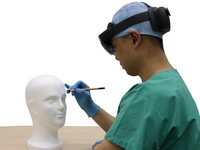
  • A subject is drawing anatomical structures on the phantom head (His permission for his image to be published was already uploaded.). Source: Image created by the authors; Copyright: The Authors; URL: https://games.jmir.org/2026/1/e75962; License: Creative Commons Attribution (CC-BY).

    Usability Study of Augmented Reality Visualization Modalities on Localization Accuracy in the Head and Neck: Randomized Crossover Trial

    Abstract:

    Background: Augmented reality (AR) head mounted displays (HMDs) could overcome the spatial dissociation between medical imaging and the surgical field, which may be particularly important in anatomically dense regions such as the head and neck. Although many HMDs offer markerless inside-out tracking at a fraction of the cost of navigation systems, their overlay accuracy with superimposition (SI) modality onto the surgical field remains limited. The virtual twin (VT), displaying holography adjacent to the surgical field, may offer a viable alternative. However, its performance is still unclear. Objective: To compare the accuracy and efficiency of the two visualization modalities SI and VT for anatomical localization in the head and neck region. Methods: In a randomized crossover trial to compare two AR visualization modalities (SI and VT), 38 participants used a HoloLens 2 (HL2) to localize point, line, and volume-based anatomical structures on head phantoms. Their performance was evaluated with respect to accuracy, workload, time, and user experience. Results: SI achieved significantly better point localization accuracy than VT both in absolute (14.4 ± 4.2 mm vs. 15.8 ± 5.5 mm; P=.003) and relative accuracy (3.4 ± 2.2 mm vs. 6.0 ± 5.0 mm; P<.001). In line-based structures, accuracy was comparable between SI (ASD: 23.4 mm; HD 31.5 mm) and VT (ASD: 23.0 mm, P=.51; HD 31.0 mm, P=.57). However, SI showed significantly higher deviation than VT in volume-based structure (ASD: 37.1 mm vs. 34.1 mm, P=.01; HD: 52.0 mm vs. 49.1 mm, P=.03). Subjects were faster with SI (P=.02), while workload NASA-TLX scores did not demonstrate a significant difference (P=.79). Conclusions: Given that SI did not clearly outperform VT under overlaid soft tissue and viewing challenges, VT remains a viable alternative in certain surgical scenarios where high accuracy is not required. Future research should focus on optimizing viewing angles guidance and the linkage between anatomical target and the skin surface. Clinical Trial: German Clinical Trial Register DRKS00032835; https://drks.de/search/en/trial/DRKS00032835

  • AI-generated image, in response to the request "An image of a child concentrating on playing a tablet game on the desktop. This is a home scene with soft daylight. The furniture is mainly light-colored. The child is focused and has a natural and happy expression. The desktop is clean and free of clutter." (Generator: Jimeng-AI/ByteDance; Date: October 28, 2025; Requestor: Qiong Li). Source: Created with Jimeng-AI, an AI system by ByteDance; Copyright: N/A (AI-generated image); URL: https://games.jmir.org/2026/1/e76114/; License: Public Domain (CC0).

    Efficacy and Safety of a Video Game–Like Digital Therapy Intervention for Chinese Children With Attention-Deficit/Hyperactivity Disorder: Single-Arm,...

    Abstract:

    Background: The digital therapy of attention-deficit/hyperactivity disorder (ADHD) based on a “self-adaptive multitasking training paradigm” has been developed to improve the cognitive functional impairments and attention deficits of children with ADHD. However, the efficacy and safety of such treatment for Chinese patients remain untested. Objective: This study aimed to preliminarily evaluate the actual intervention effects of a video game–like training software (ADHD-DTx) for children with ADHD aged 6-12 years as the first nationally certified digital therapeutics medical device for ADHD in China. We performed a single-arm, open-label efficacy and safety study. Methods: This is a single-arm, open-label, pre-post efficacy and safety study. A total of 97 participants were included in the analysis. Participants received digital therapy (ADHD-DTx) and basic behavioral parent training for 4 weeks (25 min/day, ≥5 times/week) without medication. The efficacy outcomes included the Test of Variables of Attention (TOVA), Swanson, Nolan, and Pelham Questionnaire, version 4 (SNAP-IV), Weiss Functional Impairment Rating Scale (WFIRS), and Conner’s Parent Symptom Questionnaire (PSQ). Safety-related events were monitored during and after the trial. Results: From day 0 (baseline) to day 28, the population TOVA Attention Performance Index exhibited statistically significant improvement (from mean –4.15, SE of the mean [SEM] 0.32 to mean –1.70, SEM 0.30; t94=–8.78; n=95; P<.001); the population total, inattention (AD), hyperactivity/impulsivity (HD), and oppositional defiant disorder (ODD) scores of SNAP-IV all significantly improved (total: from mean 1.33, SEM 0.05 to mean 1.09, SEM 0.05; t96=5.32; P<.001; AD: from mean 1.71, SEM 0.06 to mean 1.44, SEM 0.06; t96=4.44; P<.001; HD: from mean 1.38, SEM 0.07 to mean 1.05, SEM 0.06; t96=5.96; P<.001; ODD: mean 0.84, SEM 0.05 to mean 0.75, SEM 0.05; Z=2.47; P=.03; n=97); for WFIRS results, domains of “family” and “social activities” showed significant population improvement (family: from mean 0.75, SEM 0.05 to mean 0.65, SEM 0.04; Z=2.80; P=.01; social activities: from mean 0.56, SEM 0.05 to mean 0.45, SEM 0.05; Z=2.91; P=.01; n=97); for PSQ results, domains of “learning problem,” “psychosomatic problem,” “impulsivity-hyperactivity,” and “hyperactivity index” showed significant improvement (learning problem: from mean 1.72, SEM 0.06 to mean 1.57, SEM 0.06; Z=2.42; P=.03; psychosomatic problem: from mean 0.40, SEM 0.03 to mean 0.32, SEM 0.03; Z=2.66; P=.02; impulsivity-hyperactivity: from mean 0.94, SEM 0.06 to mean 0.80, SEM 0.06; Z=2.49; P=.03; hyperactivity index: from mean 1.06, SEM 0.05 to mean 0.92, SEM 0.05; Z=2.90; P=.01; n=97). No device-related adverse event or severe adverse event was observed or reported during or after the intervention. Conclusions: This study preliminarily suggested the significant improvements of ADHD symptoms and attention function after 4 weeks of ADHD-DTx digital therapy combining basic behavioral parent training with satisfying safety outcomes.

  • Source: Freepik; Copyright: Freepik; URL: https://www.freepik.com/free-photo/bored-girl-desk_1368018.htm; License: Licensed by JMIR.

    Shadow-Induced Forgetting in a Game-Based Paradigm on Nonclinical Adults and Its Effects on Consciousness, Emotional Valence, and Temporal Dynamics:...

    Abstract:

    Background: Memory suppression transiently disrupts hippocampal activity, leading to suppression-induced forgetting (SIF), especially for negative stimuli. However, traditional paradigms like Think/No-Think rely on explicit control and lack ecological validity. This study introduces a game-based task that implicitly elicits suppression through reversed motor mappings, providing a naturalistic approach to studying memory inhibition. Objective: To examine how shadow-induced forgetting (ShIF) varies across short-term and long-term intervals (0h, 24h, 72h), under conscious versus unconscious exposure, and between positive and negative emotional stimuli. Methods: This single-center, within-subjects experimental study involved 56 university students (mean age = 23.37 ± 1.84 years) and was conducted between December 1, 2023, and March 1, 2024. Participants learned 36 cue–target image pairs varying in emotional valence (positive, negative). They underwent a game-based paradigm where habitual motor responses were disrupted through reversed key mappings to induce an amnesic shadow. During gameplay, selected cues were presented either consciously or unconsciously, while others served as controls. Memory performance was assessed using METEOR scores (semantic similarity) immediately after intervention (0 h), and again at 24 h and 72 h. Electroencephalography (EEG) was recorded in a subset of 40 participants to examine neural correlates of memory suppression. Results: Shadow-Induced Forgetting (ShIF) effects were short-term, conscious-dependent, and selective for negative memories. A significant interaction between exposure condition and time (F₃.₆₂,₁₉₉.₃₃ = 2.7, P=.037, η²ₚ = 0.05, 95% CI [0.00, 1.00]) indicated that the effect varied across time points. Specifically, a significant ShIF effect emerged immediately after the intervention (0h) in the conscious condition (t = −2.86, P= .018, d = 0.38) but was absent in the unconscious condition, and dissipated by 72 hours. Robust main effects of time (F₂,₁₀₉.₉₉ = 102.91, P<.001, η²ₚ = 0.65, 95% CI[0.57,1.00]) and emotional valence (F₁,₅₅ = 42.43, P<.001, η²ₚ = 0.44, 95% CI [0.27, 1.00]) showed that overall recall declined over time and was consistently lower for negative images. EEG analyses revealed enhanced right frontal beta (FC6, F4, F8: P< .001) and posterior gamma (O1, O2, P8: P<.002) activity during suppression of negative cues, reflecting neural inhibition processes underlying ShIF. Conclusions: ShIF occurs primarily for consciously processed negative memories and diminishes over several days, highlighting the temporal and emotional boundaries of intentional forgetting. This study introduces a game-based approach that extends traditional suppression paradigms and offers an ecologically valid framework for investigating memory control. Importantly, we demostrate that suppression can be induced through a game-based paradigm. By examining emotional valence, exposure condition, and temporal dynamics, we extend previous work, focused only on transient effects, and clarifies the potential for practical implementation in digital therapeutic applications such as PTSD treatment. Clinical Trial: CRIS KCT0009516; https://cris.nih.go.kr/cris/search/detailSearch.do?seq=29053&search_page=L

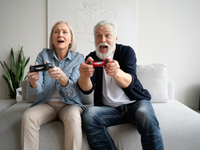
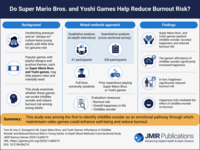
  • A visual abstract summarizing the key findings of the research titled "Super Mario Bros. and Yoshi Games’ Affordance of Childlike Wonder and Reduced Burnout Risk in Young Adults: In-Depth Mixed Methods Cross-Sectional Study," published in JMIR Serious Games in 2025. The study found that mainstream video games could evoke childlike wonder, enhancing well-being and reducing burnout. Source: JMIR Publications;

    Super Mario Bros. and Yoshi Games’ Affordance of Childlike Wonder and Reduced Burnout Risk in Young Adults: In-Depth Mixed Methods Cross-Sectional Study

    Abstract:

    Background: Unrelenting pressure and an “always-on” culture can leave no time for genuine rest among young adults. While playing video games has been noted to afford cognitive escapism and relaxation, critical questions remain about the influence of popular video games, such as Super Mario Bros., and their potential effects on young adults’ burnout risk. Objective: This study examined the extent to which, if at all, popular video games such as Super Mario Bros. and Yoshi could foster childlike wonder. It also investigated the potential of these games to reduce burnout risk among young adults. Methods: We used a mixed methods approach. First, qualitative data were collected through 41 exploratory, in-depth interviews (women: n=19, 46.3%; men: n=21, 51.2%; prefer not to disclose sex: n=1, 2.4%; mean age 22.51, SD 1.52 years) with university students who had experience playing Super Mario Bros. or Yoshi. Second, quantitative data were collected in a cross-sectional survey (N=336) of players of Super Mario Bros. and Yoshi to examine the games’ affordance of childlike wonder, overall happiness in life, and burnout risk. Results: Insights from in-depth interviews showed that players appreciated the ability of Super Mario Bros. and Yoshi games to instill childlike wonder, enhance happiness in life, and reduce burnout risk. Quantitative analyses showed that the games’ affordance of childlike wonder positively affected young adults’ happiness (b=0.30, SE=0.04, t=6.80, 95% CI 0.21-0.38; P<.001). In turn, overall happiness significantly reduced the risk of burnout (b=–0.48, SE=0.05, t=–9.55, 95% CI –0.572 to –0.377). Results showed that happiness fully mediated the impact of childlike wonder on burnout, as the direct effect of childlike wonder on burnout risk became insignificant (b=–0.08, SE=0.04, t=–1.88, 95% CI –0.16 to 0.01; P=.06), while the indirect effect of childlike wonder on burnout risk was significant (b=–0.14, bootstrapped SE=0.03, 95% CI –0.20 to –0.09). Conclusions: The findings showed the significant positive effect of popular video games such as Super Mario Bros. and Yoshi on fostering players’ childlike wonder, increasing happiness, and reducing burnout risk. This study was among the first to identify childlike wonder as an emotional pathway through which mainstream video games could enhance well-being and reduce burnout. By moving beyond escapism and nostalgia, it offers a new perspective on how well-designed, globally familiar games can function as accessible, resilience-building digital microenvironments. These findings contributed to research bridging gaming and mental health and have practical implications for game designers, educators, and health professionals interested in promoting mental wellness through everyday play. Trial Registration:

  • AI-generated image in response to the prompt "An 8-year-old girl in a primary school uniform sits on a round wooden stool. Sunlight streams through the right window into the living room, illuminating the iPad screen where animated tuna fish and rotating turtles are displayed. Her chubby hands rest on the edge of a round table covered with a floral tablecloth, scattered with children's picture books and strawberry milk. The table surface extends into a softly blurred bookshelf background" (Generator: Jimeng 3.0 May 13, 2025; Requestor: Manting Hou). Source: Created with Jimeng 3.0; Copyright: N/A (AI-generated); URL: https://games.jmir.org/2025/1/e77402; License: Public Domain (CC0).

    Serious Games Integrating Perceptual Learning and Stereopsis Training in Children With Amblyopia: Single-Arm Pre-Post Feasibility Study

    Abstract:

    Background: Amblyopia, a leading cause of preventable childhood blindness, often remains inadequately addressed by traditional treatment methods such as refractive correction and occlusion therapy, which can be non-interactive and lead to poor adherence. Objective: This study aimed to design and assess the efficacy of a serious game intervention that merges perceptual learning (PL) with stereopsis training in children diagnosed with amblyopia. Methods: We evaluated visual acuity, accommodative sensitivity, binocular accommodation, and stereopsis in a cohort of amblyopic children aged 7 to 12 years before and after a 3-month intervention. Participants engaged in visual training via a serious game, attending sessions four times weekly for 30 minutes each. Results: The intervention resulted in statistically significant improvements in visual acuity, accommodative sensitivity, binocular accommodation, and stereoscopic function (p < 0.01). Notably, adjustment sensitivity (Cohen's d = 1.216) and binocular accommodation (Cohen's d = 1.112) exhibited large effect sizes. Conclusions: The integration of gamified elements into amblyopia treatment not only improved treatment adherence but also significantly enhanced visual function in children. This interactive approach effectively combines perceptual learning with stereopsis training, presenting a promising alternative to conventional therapies. Clinical Trial: The research protocol adhered to the principles of the Declaration of Helsinki and received approval from the Human Research Ethics Committee of the Faculty of Psychology, Shenzhen University(SZU_PSY_2024_100)

  • Source: Image created by the authors; Copyright: Tobias Kowatsch; URL: https://games.jmir.org/2025/1/e70297; License: Licensed by the authors.

    Long-Term Usage of Breeze, a Gamified Breathing Training App, and Its Effect on Momentary Relaxation in People With Cancer: Cohort Study

    Abstract:

    Background: People with cancer often experience stress. Digital health interventions (DHIs) can help individuals increase momentary relaxation. Breeze is a gamified breathing training that can be embedded into DHIs. Its effectiveness in controlled cross-sectional studies was shown. However, adherence to Breeze and its effect on momentary relaxation in longitudinal interventional studies has yet to be investigated. Objective: This work aims to assess the use of Breeze and its effect on momentary relaxation in people with cancer. Methods: Breeze was one of seven relaxation techniques included in the CanRelax 2.0 app, designed specifically for individuals diagnosed with cancer. Participants could select any of the seven techniques to promote momentary relaxation. The intervention was designed to last 10 weeks. However, participants were allowed to use the CanRelax 2.0 app after that period. Participants were adults diagnosed with cancer in the last five years recruited across Switzerland, Germany, and Austria. Momentary relaxation was measured pre- and post-exercise using an 11-point visual analog scale, while Breeze was assessed through objective usage metrics. Statistical analyses included linear mixed-effects models and effect size calculations. Results: Out of 352 participants, 118 (33.5%) used Breeze at least once. The 118 participants engaged in 754 breathing sessions with Breeze. Momentary relaxation was assessed and calculated for 249 (33.0%) Breeze sessions. The use of Breeze remained stable even after the formal intervention period. Participants also followed the pre-defined breathing rates of Breeze. On average, a small effect on momentary relaxation was observed for 2-minute breathing sessions (d = .20), while a large effect (d = .74) resulted from breathing sessions >=4 minutes. Conclusions: This study shows the potential of Breeze to reduce acute stress in individuals with a chronic condition, such as cancer. By combining gamification with evidence-based breathing techniques, Breeze fosters sustained user engagement and momentary relaxation. Future research aims to assess the impact of Breeze on other populations and chronic conditions. Clinical Trial: German Clinical Trials Register DRKS00027546; registered on 23 February 2022

  • Source: Image created by the authors; Copyright: The Authors; URL: https://games.jmir.org/2025/1/e77655/; License: Creative Commons Attribution (CC-BY).

    Effects of Competitive Exergaming–Based Esports on Older Adults in Hong Kong: Nonrandomized Controlled Pilot Study

    Abstract:

    Background: Hong Kong faces a rapidly aging population, with many older adults not meeting recommended physical-activity levels and struggling to maintain long-term exercise adherence. Exergaming offers an accessible, technology-supported way to promote health conditions while providing immediate feedback and task variability among older adults. Objective: This study aimed to evaluate the effects of an 8-week competitive exergaming intervention on functional fitness, cognition, loneliness, physical activity (PA) enjoyment, and quality of life among community-dwelling older adults in Hong Kong. Methods: We conducted a pragmatic, nonrandomized, 2-group pilot with community participants allocated to either a competitive exergaming group (EG) or a passive control group (CG). EG attended 16 instructor-led 90-minute sessions playing Fitness Boxing (Nintendo Switch), including head-to-head bouts and a bracketed tournament. Outcomes were assessed at baseline and postintervention. Primary analyses used repeated-measure analysis of covariance (time: pre and post; group: EG and CG) adjusted for age, sex, education, marital status, employment, financial status, and housing. Partial η2 was used to quantify effect sizes. Given the pilot nature, P values are unadjusted for multiplicity and interpreted cautiously. Results: A total of 48 older adults completed assessments (EG: n=24; mean age 69.50, SD 4.77 years; CG: n=24; mean age 71.50, SD 6.74 years). Significant group × time interactions favored EG for lower-body strength (30-second chair stand: F1, 48=12.39; P<.001; partial η2=0.22), aerobic endurance (2-minute step: F1, 48=4.89; P=.03; η2=0.10), and PA enjoyment (Physical Activity Enjoyment Scale: F1, 48=9.36; P<.001; η2=0.18). For the Number Comparison Test (processing speed), the group × time interaction was not significant (P=.08); however, an exploratory main effect of group indicated higher performance in EG across time (P=.04). Executive function (Trail Making Test parts A and B), loneliness, and Short Form-36 Health Survey subscales showed no significant effects. Conclusions: Competitive exergaming was feasible and produced small to moderate improvements in lower-body strength, aerobic endurance, and enjoyment of PA. Cognitive effects were inconclusive and should not be overinterpreted given the nonrandomized design, passive control, small sample, and multiple outcomes. Future randomized trials with active comparators and longer duration are warranted.

  • Immersive VR cycling. Source: The Authors; Copyright: The Authors; URL: https://games.jmir.org/2025/1/e75777/; License: Creative Commons Attribution (CC-BY).

    Effects of an Immersive Virtual Reality–Based Exercise Intervention on Psychological and Physiological Outcomes in College Students: Randomized Controlled...

    Abstract:

    Background: Physical inactivity is a major public health issue among college students, often exacerbated by academic pressures and lifestyle shifts. Traditional exercise interventions often face challenges with adherence due to low motivation and engagement. Immersive virtual reality (VR)–based exercise interventions may address these barriers by providing interactive and motivating experiences, yet empirical evidence regarding their psychological and physiological benefits remains scarce. Objective: This study aims to evaluate the effects of a 4-week immersive VR-based exercise intervention on psychological and physiological health outcomes in college students. Methods: A randomized controlled trial was conducted involving 36 college students randomized into either a VR exercise group (n=17, 47%) or a no-intervention control group (n=19, 53%). Participants in the VR group engaged in immersive VR cycling sessions (two 60-minute sessions weekly) using the VirZoom VR system, while the control group continued their normal routines. Psychological outcomes were assessed during preintervention and postintervention assessments, including exercise motivation (Behavioral Regulation in Exercise Questionnaire-2), mood states (Brunel Mood Scale), and depressive symptoms (Beck Depression Inventory). Physiological outcomes assessed were cardiovascular fitness (3-Minute Step Test) and body composition (bioelectrical impedance analysis). We used a 2-way repeated measures ANOVA to analyze the effects of the intervention. Results: Significant time×group interactions indicated enhanced intrinsic motivation (P=.02; η2=0.25); improved mood states with increased vigor (P=.01; η2=0.18); and decreased confusion (P=.01; η2=0.17), fatigue (P=.02; η2=0.16), and tension (P=.003; η2=0.24) in the VR group. Depressive symptoms were also significantly reduced (P=.03; η2=0.14). Physiological outcomes showed significant improvements in the VR group, including decreased body fat percentage (P<.001; η2=0.34) and enhanced cardiovascular fitness (P<.001; η2=0.47) compared to the control group. Conclusions: This study indicated that a 4-week immersive VR-based exercise intervention may confer short-term psychological and physiological benefits among college students compared to the no-intervention control group under COVID-19 pandemic–related constraints. Future studies should adopt active control designs and be conducted in real-world settings, incorporating objectively determined intensity monitoring and follow-up to further investigate effectiveness and real-world scalability. Trial Registration: ClinicalTrials.gov NCT06902727; https://clinicaltrials.gov/study/NCT06902727

  • Source: Pexels; Copyright: Alexy Almond; URL: https://www.pexels.com/zh-cn/photo/3758022/; License: Licensed by JMIR.

    Development and Evaluation of a Monocular Camera–Based Mobile Exergame for at-Home Intervention in Individuals at High Risk of Type 2 Diabetes: Randomized...

    Abstract:

    Background: Exergames have emerged as effective interventions for promoting physical activity and preventing type 2 diabetes (T2D). Kinect-based exergames have demonstrated improvements in exercise adherence and health outcomes, but their high cost and reliance on specialized hardware hinder widespread home-based adoption. Recent advances in computer vision now enable monocular-camera-based systems, offering a potentially cost-effective and scalable alternative for promoting physical activity at home. Objective: This study aimed to evaluate the feasibility and user experience of monocular-camera-based exergames as a home-based intervention for individuals at risk for T2D. Methods: Forty-five community-dwelling individuals at high risk for T2D (mean age = 47.12, SD = 6.92) were recruited and randomized into three groups (n = 15 each): (1) Control group (traditional offline exercise), (2) Kinect group (Kinect-based exergame), and (3) Monocular group (Monocular-camera-based exergame). Participants engaged in a 10-minute intervention once per week for 7 weeks. Data were collected at three time points: baseline (exercise performance: heart rate and perceived fatigue), post-intervention (exercise performance and user experience, including game experience and intrinsic motivation), and follow-up (user engagement and qualitative feedback). One-way ANOVA was used for data analysis. Results: Exercise performance was comparable across all groups, with no significant differences in heart rate (p = 0.757) or fatigue levels (p = 0.248). However, participants in the monocular group reported significantly lower fatigue compared to the control group (p = 0.035). Intrinsic motivation was significantly higher in both the Kinect (M = 35.13, SD = 3.20) and monocular (M = 34.00, SD = 4.41) groups compared to the control group (M = 26.06, SD = 1.87; p < 0.001), with no significant difference between the two exergame groups (p = 0.443). While most user experience measures showed no significant differences, the monocular group reported a higher perceived challenge (M = 3.45) compared to the Kinect group (M = 2.96; p = 0.092). Additionally, the monocular group exhibited higher engagement, as evidenced by more frequent use, fewer challenges, and a greater intention to continue using the system. Conclusions: Monocular-camera-based exergame is a feasible and effective solution for promoting physical activity in individuals at risk for T2D. It offers motivational and experiential benefits similar to Kinect-based systems but require less costly and more accessible equipment. These findings suggest that monocular systems have strong potential as scalable tools for home-based chronic disease prevention. Clinical Trial: The trial was registered in ClinicalTrials.gov (NCT06950528); https://clinicaltrials.gov/study/NCT06950528.

  • Source: Image created by the Authors; Copyright: The Authors; URL: https://games.jmir.org/2025/1/e77920; License: Creative Commons Attribution (CC-BY).

    Immersive Virtual Reality–Assisted Therapy for Distressing Voices in Psychosis: Qualitative Study of Participants’ and Therapists’ Experiences in the...

    Abstract:

    Background: Immersive virtual reality-assisted therapy (VRT) is a relational therapy for distressing voices in psychosis. Like AVATAR therapy (AT), VRT centres on therapist-facilitated dialogues with a digital avatar representing a voice. Unlike AT, VRT employs immersive virtual reality (VR). While participant experiences of AT have been explored, therapist perspectives remain unexamined, and for VRT, neither participant nor therapist experiences have been studied. Understanding these perspectives is essential to inform optimization of therapy, future research, and implementation. Objective: The objective of this qualitative study was to explore both trial participants’ and therapists’ experience of VRT in the Challenge trial. Methods: Semi-structured interviews were conducted with 10 trial participants and 8 therapists across three Challenge trial sites. Trial participants were purposively sampled to ensure site representation and variation in voice-hearing duration. Individual interviews were conducted with trial participants, while therapists participated in site-based groups with 2–3 in each. Interviews were audio-recorded, transcribed, and subjected to reflexive thematic analysis from a critical realist position. Coding and theme development were inductive. People with lived experience were invited to initial focus groups for topic guide development and a later theme validation workshop. Reporting followed Standards of Reporting Qualitative Research (SRQR). Results: Five overarching themes were generated: (1) Using technology to meet the voice, (2) A different approach to voice-hearing and treatment, (3) On a tight schedule, (4) A toolbox for transformation, and (5) A price to pay. Trial participants and therapists generally found VRT acceptable, appropriate, and feasible. Highlights included the acknowledging approach to the voice(s), facilitation of engagement with the voice(s), and opportunity to share the otherwise private experience of voice-hearing. Externalizing and embodying the voice(s) in VR supported avatar role-plays and was seen as a key affordance. Positive outcomes included increased trial participant empowerment and self-worth, enabling or improvement of voice dialogue, new understanding of voice intentions, and changes in voice frequency or content. Challenges included instances of participant anxiety, exhaustion, or suboptimal sense of presence; adverse voice reactions; technological malfunctions and limitations to avatar design; measurement insensitivity; tensions between assertiveness and compassion; difficulties with reproducing negative voice-content; and the demanding nature of the therapy and the non-traditional skills required of therapists. Conclusions: The study provided comprehensive insights into trial participants’ and therapists’ experience of VRT in the Challenge trial. Findings share several similarities with qualitative research on other relational therapies for distressing voices and highlight VRT’s potential for positive change. Key considerations for future research and implementation include monitoring anxiety and voice reactions, ensuring operational reliability of hard- and software, and addressing the additional effort required by therapists, which may be unsustainable in routine practice. As a demanding intervention, successful implementation of VRT will require adequate training, supervision, and structural support.

  • Source: Freepik; Copyright: pressfoto; URL: https://www.freepik.com/free-photo/man-playing-game-smartphone_6801194.htm; License: Licensed by JMIR.

    Effects of Progressive Aerobic Training on Executive-Reward Network Connectivity and Symptoms of Internet Gaming Disorder: Randomized Controlled Trial

    Abstract:

    Background: Background: Internet gaming disorder (IGD) causes neurocognitive deficits and brain functional. Traditional interventions require specialists and incur high costs, while progressive aerobic training (PAT) shows more practical. But its effect on IGD and the underlying neural mechanism remains unclear. Objective: This pre-registered, randomized controlled, single-blind study examined the efficacy of a novel non-pharmacological intervention by elucidating the neurocognitive mechanisms in IGD. Methods: Methods: A total of 72 IGD participants were recruited and randomly assigned to a PAT group or a free training (FT) group. Sixty-four participants completed the experiment (PAT:33; FT: 31), which included pre- and post-treatment fMRI scans and 20 PAT sessions in a month. Regional homogeneity and degree centrality are calculated, and the overlapping brain regions were used as seed points for FC analysis. The correlation between FC and behavioral data and neurotransmitters were also evaluated. Results: Results: Compared with the FT group, the PAT group showed decreased addiction severity and craving after the intervention. FC analysis showed that PAT increased the FC within the executive control network (ECN) and between the ECN and the reward network (RN). FC was significantly associated with cannabinoid receptors CB1 and type-5 metabotropic glutamate receptor (mGluR5). Conclusions: Conclusions: This study suggests that PAT is effectively in treating IGD by improving the FC between the ECN and the RN, enhancing the top-down control. These results are supported by the correlation between FC and behavior and neurotransmitters, indicating that PAT is a very promising intervention approach. Clinical Trial: The protocol of the trial had been registered at the Chinese clinical trial registry (http://www.chictr.org.cn; ChiCTR2400090834).

Citing this Article

Right click to copy or hit: ctrl+c (cmd+c on mac)

Latest Submissions Open for Peer-Review:

View All Open Peer Review Articles
  • A User-Experience Driven Design of Modular Card Games for Dementia Care: Integrating Cultural Cues and Neural Adaptability Adaptability

    Date Submitted: Dec 7, 2025

    Open Peer Review Period: Jan 3, 2026 - Feb 28, 2026

    Background: The global increase in the older adult population has led to a rising prevalence of cognitive impairment and dementia. Non-pharmacological interventions, particularly engaging activities l...

    Background: The global increase in the older adult population has led to a rising prevalence of cognitive impairment and dementia. Non-pharmacological interventions, particularly engaging activities like tabletop games, are crucial for cognitive maintenance and well-being. However, existing commercial cognitive assistive tools often fail due to two main issues: a disconnect from the cultural and life experiences of the users, and an overly high cognitive load that hinders engagement and efficacy in clinical settings. There is an urgent need for an intervention tool designed specifically for this population, integrating principles of cultural relevance and neural adaptability to maximize therapeutic outcomes. Objective: This study aimed to develop a user experience-oriented, modular card-based assistive tool as an effective non-pharmacological intervention for older adults with mild cognitive impairment and dementia. The primary goal was to construct a robust cognitive intervention framework that enhances user motivation and improves neural feedback efficiency by integrating both cultural adaptability and neuroplasticity principles. Methods: The research utilized a multi-stage mixed-methods approach, grounded in User Experience Innovation Design methodology. The study combined literature analysis, structured expert interviews, ethnographic participatory observation, and preliminary prototype testing. The work was conducted across long-term care centers, dementia care centers, and day care centers in a county in southern Taiwan. Seventeen participants, including healthcare professionals, caregivers, administrative staff, and healthy older adults, were involved in the data collection and co-creation process to ensure the practical and cultural relevance of the design. Results: Results: The findings confirmed that cultural symbol misalignment and excessive cognitive demand were the main barriers to using current assistive tools, accounting for approximately 73% of reported usage difficulties. The newly developed tool, through the embedding of localized cultural contexts and a dynamic staged design, significantly enhanced participant motivation. Crucially, preliminary testing indicated effective enhancement of neural feedback efficiency. Conclusions: The study successfully designed and validated a modular cognitive assistive tool that overcomes common barriers by prioritizing cultural embedding and dynamic cognitive pacing. We propose a "Cultural-Cognitive Embedding Model" as a guiding framework, emphasizing that assistive tool design must integrate local life history and dynamically adjust cognitive difficulty to effectively promote neuroplasticity and sustained engagement in dementia care.

  • What are the effects of virtual reality interventions on anxiety, pain, and disabilities of the arm, shoulder, and hand (DASH) in breast cancer patients: A systematic review and meta-analysis

    Date Submitted: Dec 9, 2025

    Open Peer Review Period: Dec 9, 2025 - Feb 3, 2026

    Background: Anxiety, pain, and upper-limb dysfunction are common complications in breast cancer patients affecting quality of life. Virtual reality (VR) interventions have emerged as potential therape...

    Background: Anxiety, pain, and upper-limb dysfunction are common complications in breast cancer patients affecting quality of life. Virtual reality (VR) interventions have emerged as potential therapeutic approaches, but evidence remains inconclusive. Objective: To evaluate the effectiveness of VR-based interventions on anxiety, pain, and upper-limb function in breast cancer patients. Methods: A systematic literature search was conducted in PubMed (MEDLINE), EMBASE, CINAHL, and the Cochrane Library for studies published from 2015 to May 2025. Inclusion criteria were: (1) adults diagnosed with breast cancer; (2) any VR-based intervention including immersive or non-immersive modalities; (3) comparison with standard care, conventional rehabilitation, or control conditions; (4) outcomes including breast cancer-related anxiety, pain, distress, shoulder range of motion, and rehabilitation measures; and (5) study designs limited to randomized controlled trials or quasi-experimental studies. Hedges' g with 95% confidence intervals were calculated for continuous outcomes, and standardized mean differences were used to pool effect sizes across studies. Results: The systematic review included eighteen articles meeting inclusion criteria, and data from ten of these studies contributed to the meta-analysis. The statistical analysis demonstrated significant positive effects for anxiety (SMD=1.04, 95% CI 0.31 to 1.78, P<0.001) and pain (SMD=1.26, 95% CI 0.63 to 1.90, P <0.001), indicating that VR interventions effectively reduced both psychological symptoms. However, the meta-analysis indicated no statistically significant difference in upper extremity functions (SMD=0.97, 95% CI -1.10 to 3.04, P =0.360) between VR intervention and control groups. Conclusions: This systematic review and meta-analysis evaluated the effectiveness of virtual reality interventions in reducing anxiety, pain, and upper-limb dysfunction among breast cancer patients. The results demonstrated that VR effectively alleviated anxiety and pain but showed no significant effects on improving upper-limb function. These findings suggest that VR may be a valuable adjunctive therapy for managing psychological symptoms in breast cancer care. However, further large-scale, well-designed randomized controlled trials are needed to confirm the feasibility, optimal implementation protocols, and clinical applicability of VR interventions in comprehensive breast cancer rehabilitation programs. Clinical Trial: PROSPERO International Prospective Register of Systematic Reviews CRD420251023597

  • Effects and Dose–Response Relationships of Virtual Reality-Based Training on Balance and Mobility in Patients with Parkinson's Disease: A Systematic Review and Meta-Analysis of Randomized Controlled Trial

    Date Submitted: Dec 6, 2025

    Open Peer Review Period: Dec 6, 2025 - Jan 31, 2026

    Background: Background As an emerging technology, virtual reality has been widely used in the rehabilitation of patients with Parkinson's disease, but at present, there is no review systematically el...

    Background: Background As an emerging technology, virtual reality has been widely used in the rehabilitation of patients with Parkinson's disease, but at present, there is no review systematically elaborating the optimal training dose for patients with Parkinson's disease. Objective: Objective To systematically evaluate the effects of virtual reality (VR)-based training on balance and mobility in Parkinson's disease patients and explore its potential dose-response relationship. Methods: Methods Randomized controlled trials (RCTs) published until August 16, 2025, were screened from five databases. The Cochrane collaboration tool was used to assess the risk of bias for quality evaluation. Stata 18.0 and R software were used for the meta-regression analysis and dose-response analysis. Results: Results A total of 22 studies involving 848 patients were included. Compared with conventional rehabilitation training, VR-based training improved balance function (BBS) (SMD = 0.55, 95% CI [0.28, 0.83]), functional mobility (TUGT) (SMD = -0.33, 95% CI [-0.61, -0.06]), motor function (UPDRS-III; SMD = -0.50, 95% CI [-0.77, -0.23]), balance confidence (ABC; SMD = 0.56, 95% CI [0.15, 0.97]), and activities of daily living (UPDRS-II; SMD = -0.74, 95% CI [-1.47, -0.01]), but no statistically significant differences in walking ability (6MWT, SMD = 0.19, 95% CI [-0.08, 0.47]) or quality of life (PDQ-39, SMD = -0.12, 95% CI [-0.38, 0.14]) were observed between the two interventions. Meta-regression analysis demonstrated a linear positive correlation between BBS and duration, indicating that each additional week resulted in an increase of 0.16 points in the BBS. The dose-response analysis revealed a large benefit over conventional rehabilitation training after 6 weeks (SMD = 0.25, 95% CI [0.03, 0.48]). The total number of interventions exhibited a nonlinear correlation with BBS, demonstrating optimal efficacy at 50 sessions (SMD=1.22, 95% CI [0.76, 1.69]). The advantages progressively waned with additional increments in the total number of interventions. There was a nonlinear relationship between both the frequency and total number of interventions and the UPDRS-III score. The best number of frequency was 3 sessions per week (SMD = -0.69, 95% CI [-0.98, -0.41]), and the best total number of interventions was 30 (SMD = -0.81, 95% CI [-1.17, -0.46]). Conclusions: Conclusion Our meta-analysis suggests that VR-based training is a promising intervention for enhancing balance function and mobility in PD patients compared with conventional rehabilitation training. For short-term VR training, Parkinson's disease patients should perform balance function training for at least 6 weeks, and the best results are approximately 50 total training sessions. To improve motor function, the best results are achieved by performing 3 sessions a week for a total of approximately 30 sessions. Clinical Trial: CRD420251182349